
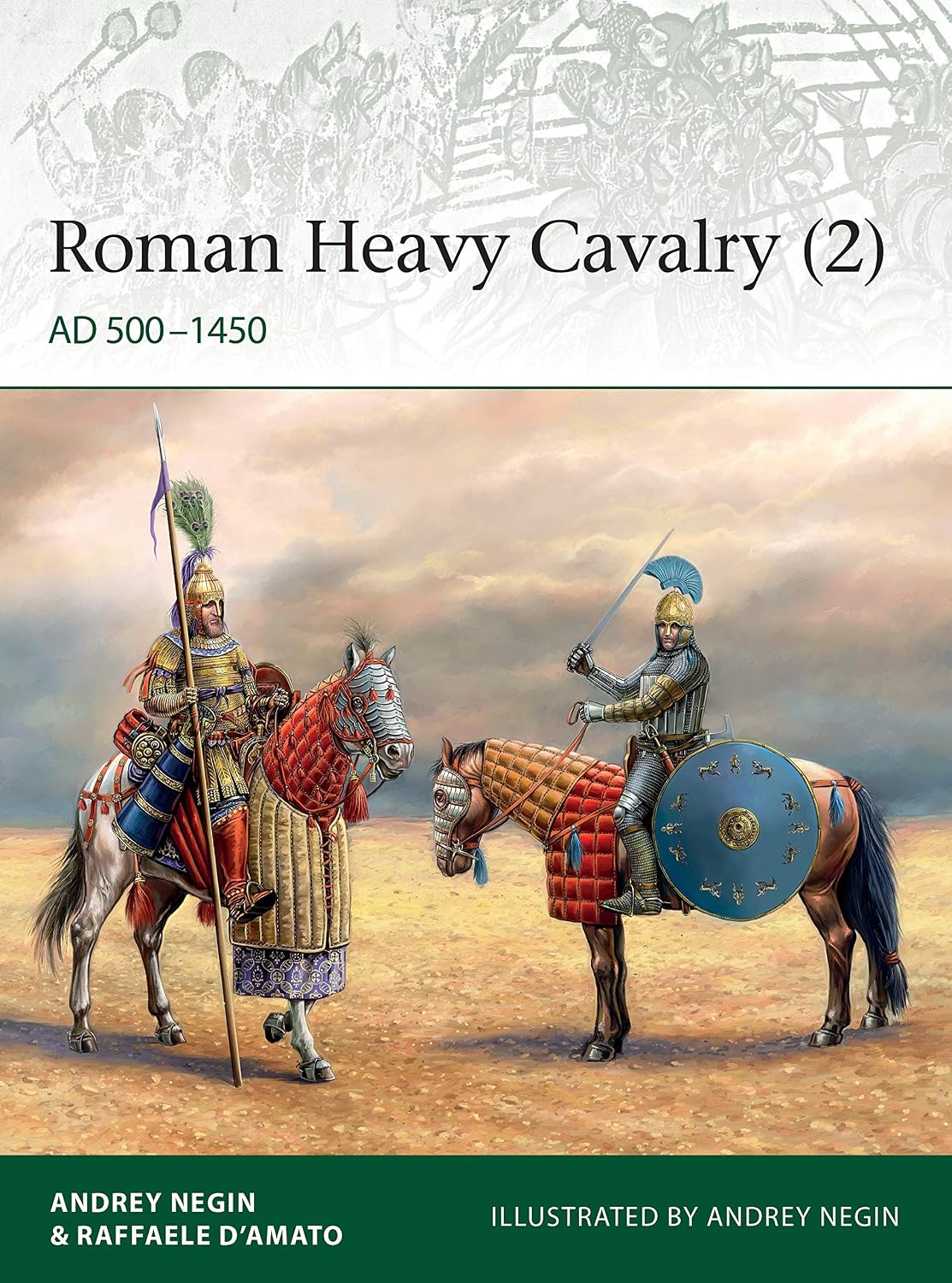
Roman Heavy Cavalry (2): AD 500–1450 (Elite, 235)
Produktdetails
| Artikelnummer | 233580386 | Erscheinungsdatum | 2026/06/27 | Listenpreis | €7.32 | Modellnummer | 233580386 | ||
|---|---|---|---|---|---|---|---|---|---|
| Kategorie | |||||||||
Following Roman Heavy Cavalry (1) on the earlier centuries, this book explains and illustrates the armor, weapons, organization, and deployment of elite heavy armored cavalry units during their long history in the Eastern Roman (Byzantine) Empire.In the twilight of the Western Roman Empire in the 5th–6th centuries, the elite of the field armies was the heavy armored cavalry–the cataphracts, clad in lamellar, scale, mail, and padded fabric armor. After the fall of the West, the Greek-speaking Eastern or Byzantine Empire survived for nearly a thousand years, and cavalry remained predominant in its armies, with the heaviest armored regiments continuing to provide the ultimate shock-force in battle. Accounts from Muslim chroniclers show that the ironclad cataphract on his armored horse was an awe-inspiring enemy: “...they advanced against you, iron-covered–one would have said that they advanced on horses which seemed to have no legs.” The heavy units included the regiments of the Tagmata (the central imperial force based around Constantinople)–the Scholai, Eskoubitoi, Athanatoi (or Vighla) and Ikanatoi–and also provincial units raised from the populations of the Themata or army corps districts throughout the Empire. By the 11th century the latter were increasingly being replaced with mercenaries, as provincial governors became semi-independent and often rebellious warlords. This disunity contributed to the Empire's disastrous defeat by the Turks at Manzikert in 1071; thereafter the shrunken Empire relied even more heavily on cavalry, since its field armies had to be mobile to meet the many threats to the frontiers.This new study, replete with stunning full-color illustrations of the various units, offers an engaging insight into the fearsome heavy cavalry units that battled against the enemies of Rome's Eastern Empire. Read more
Korrektur der Produktinformationen
Wenn Sie Unvollständigkeiten oder Fehler in den Produktinformationen auf dieser Seite bemerken, nutzen Sie bitte das Korrekturformular unten.
KorrekturanfrageKundenbewertungen
Für dieses Produkt liegen derzeit keine schriftlichen Bewertungen vor.